



Up to one-third of the world’s population carries Toxoplasma gondii, a parasite most people never realize they’ve encountered. Infection typically occurs through undercooked meat or contact with contaminated soil or cat feces. Once inside the body, the parasite spreads and then slips into a long-term hiding strategy: it forms microscopic cysts, primarily in the brain and muscle tissue.
For most healthy people, the infection causes no obvious symptoms. But the parasite does not disappear. It remains for life, encased inside cysts that can contain hundreds of slow-growing parasites known as bradyzoites. These cysts are protected by a durable wall and can reach up to 80 microns across—large for an intracellular pathogen. Individual bradyzoites measure about five microns in length and are commonly found in neurons, as well as skeletal and cardiac muscle.
The real danger emerges when cysts reactivate. In individuals with weakened immune systems, bradyzoites can become rapidly replicating tachyzoites that spread throughout the body. This shift can trigger severe illness, including toxoplasmic encephalitis in the brain or ocular toxoplasmosis that threatens vision. Women who become infected for the first time just prior to or during pregnancy can pass the infection to the developing fetus, leading to congenital toxoplasmosis.
Despite these dangers, current treatments target only the rapidly multiplying tachyzoites responsible for acute illness. They do not eliminate cysts. Once formed, cysts are resistant to all existing therapies and persist indefinitely. That resilience has made toxoplasmosis notoriously difficult to cure.
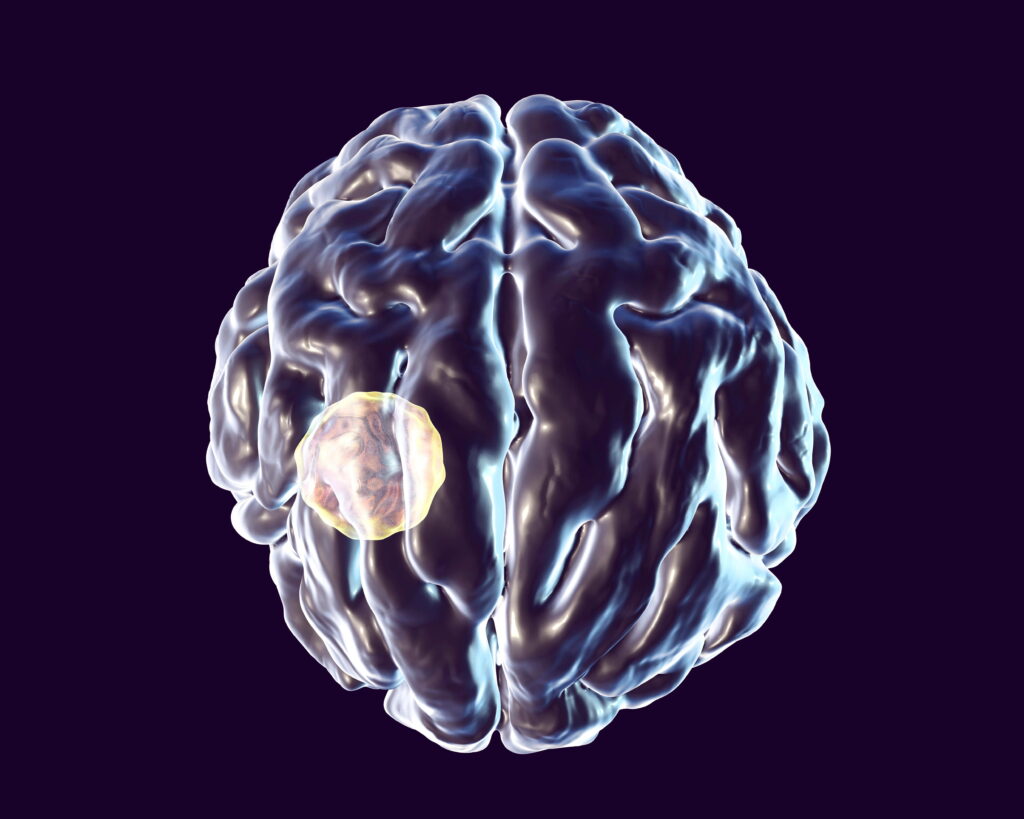
Reevaluating the Nature of Toxoplasma Cysts
For decades, researchers believed each cyst housed a single, uniform population of dormant parasites waiting to reactivate. That view has now changed dramatically.
Using advanced single-cell RNA sequencing, researchers at the University of California, Riverside (UCR) analyzed parasites isolated directly from cysts in living brain tissue. They discovered that cysts are not static storage units but complex, dynamic communities.
“We found the cyst is not just a quiet hiding place —it’s an active hub with different parasite types geared toward survival, spread, or reactivation,” said Emma Wilson, professor of biomedical sciences in the UCR School of Medicine and lead author of the study, published in Nature Communications.
Rather than containing identical bradyzoites, each cyst holds at least five distinct subtypes. Though all are classified as bradyzoites, they perform different biological roles. Some appear primed for reactivation; others are optimized for persistence.
“For decades, the Toxoplasma life cycle was understood in overly simplistic terms, conceptualized as a linear transition between tachyzoite and bradyzoite stages,” Wilson said. “Our research challenges that model. By applying single-cell RNA sequencing to parasites isolated directly from cysts in vivo, we found unexpected complexity within the cyst itself.” The parasite, it turns out, is not merely hiding. It is diversifying.
Breaking Through Old Research Limits
Studying cysts has long posed a challenge. They develop slowly, embed deeply within tissues such as the brain, and do not form efficiently in standard laboratory cultures. As a result, most research has focused on tachyzoites grown in vitro, leaving the biology of chronic infection largely unexplored.
Wilson’s team overcame this barrier using a mouse model that closely mirrors natural infection. “Because mice are a natural intermediate host for Toxoplasma, their brains can harbor thousands of cysts. By isolating these cysts, digesting them enzymatically, and analyzing individual parasites, we were able to gain a view of chronic infection as it occurs in living tissue,” Wilson explained.
A New Target for Treatment
The findings help explain why drug development has struggled. If cysts harbor multiple specialized subtypes, therapies targeting a single form of the parasite may miss critical targets. “Our work changes how we think about the Toxoplasma cyst,” Wilson said. “It reframes the cyst as the central control point of the parasite’s life cycle. It shows us where to aim new treatments. If we want to really treat toxoplasmosis, the cyst is the place to focus.”
Toxoplasmosis may be widespread and often silent, but it is far from simple. By exposing the hidden diversity within cysts, scientists have taken a critical step toward finally disarming a parasite that has quietly persisted for millennia.
Did you enjoy this blog post? Check out our other blog posts as well as related topics on our Webinar page.
QPS is a global, full-service, GLP/GCP-compliant contract research organization (CRO) delivering the highest grade of discovery, bioanalysis, preclinical and clinical drug development services. Since 1995, QPS has grown from a small bioanalysis shop into a full-service CRO with 1,200+ employees in the US, Europe, Asia and India. Today, QPS offers expanded pharmaceutical contract R&D services with special expertise in pharmacology, DMPK, toxicology, bioanalysis, translational medicine, PBMC processing, central safety labs, clinical trials, and clinical research services. An award-winning leader focused on bioanalysis and clinical trials, QPS is known for proven quality standards, technical expertise, a flexible approach to research, client satisfaction, turnkey laboratories, Phase I/II clinical units, and multi-site clinical research services. Through continual enhancements in capacities and resources, QPS stands tall in its commitment to delivering superior quality, skilled performance, and trusted service to its valued customers. For more information, visit www.qps.com or email info@qps.com.