



Colorectal cancer is a stealthy killer, causing as many as 900,000 deaths each year, per the most recent World Health Organization data. As the second-leading global cause of cancer death, colorectal cancer predominantly affects individuals aged 50 and above, although more and more young adults are receiving diagnoses. The data is alarming; however, recent research suggests a new approach to prevention. During the study, published in Nature in April 2026, Johns Hopkins researchers discovered how to block a specific gut toxin that has been linked to colon cancer. Find out more below.
Understanding the Role of BFT in Colon Cancer
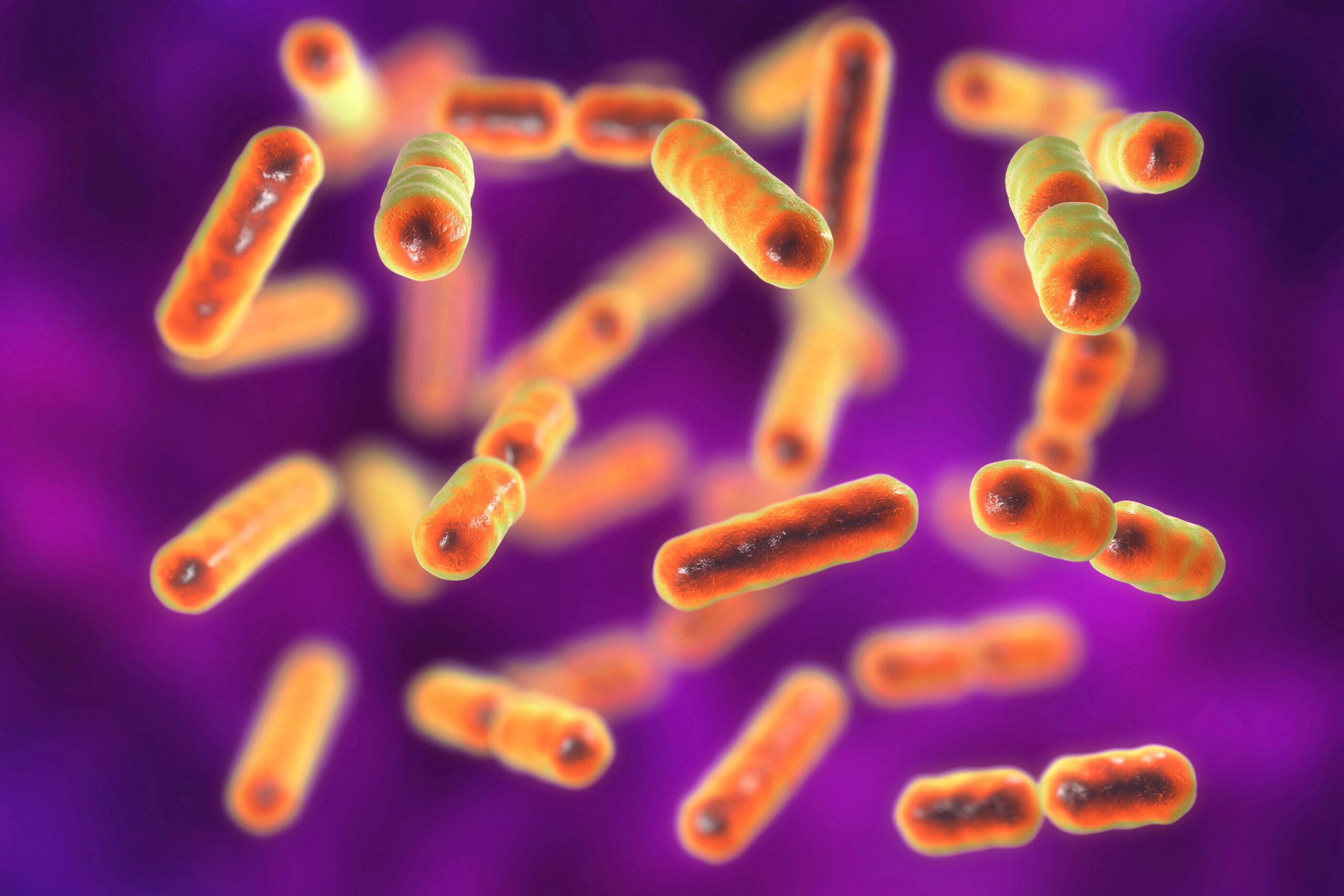
Per a Johns Hopkins press release, this research was largely based on a 2009 study, which proved that Bacteroides fragilis (B. fragilis), a common gut bacterium, drives the formation of colon tumors. These tumors can lead to colorectal cancer. In the 2009 study, researchers found that B. fragilis drives tumor formation by secreting a toxin called Bacteroides fragilis toxin (BFT), which damages the colon lining. But there was one major problem with the 2009 study: the team could not determine how the toxin latched onto colon cells.
How Does a Gut Toxin Gain Direct Access to Colon Cells?
The lab of senior author Cynthia Sears had previously confirmed that BFT damages the gut by dividing E-cadherin, a protein that helps maintain the colon’s protective barrier. But how does BFT bind to E-cadherin?
To identify the binding mechanism, the researchers first ran a genome-wide CRISPR screen. One by one, the team screened out genes in the epithelial cells lining the colon. When the team screened out the CLDN4 gene (claudin-4), which contributes to the structure of epithelial cells, the BFT toxin was unable to bind. E-cadherin was left intact. In other words, the BFT toxin can only access E-cadherin by attaching to claudin-4. Claudin-4 is the “doorway” researchers have been seeking since 2009.
“It took a while to get the assay working and validate the approach, but once we were able to do the screen, claudin-4 was a clear, resounding top hit,” said researcher Maxwell White in the Johns Hopkins press release. “That was an exciting moment.”
Blocking the “Doorway” to the Colon
First, the researchers identified the doorway. Next, they had to verify their work.
To do so, they teamed up with structural biologists at the Molecular Biology Institute of Barcelona. The teams worked together to use biophysical techniques that showed that BFT and claudin-4 are capable of locking tightly together, forming what was described as “a tight, one-to-one complex in a test tube” in the Johns Hopkins press release.
Finally, after identifying and verifying the doorway, the team attempted to “block” it in living systems. Alongside Harvard Medical School collaborators, the team examined how the toxin behaved in mouse models. They created a soluble claudin-4 peptide (CLN4sol) and assessed whether it could “block BFT toxicity” in mice, per the study abstract. CLN4sol was intended to act as a “decoy” by displaying portions of the receptor that the toxin normally recognizes, essentially distracting the toxin.
As hoped, BFT attached to the decoy proteins instead of the actual colon cells. This strategy successfully protected mice from BFT-induced colon damage. Mice injected with CLN4sol “retained largely intact E-cadherin,” the team wrote in the abstract. This proves that blocking the interaction between BFT and claudin-4 is a valuable pathway to pursue in the fight to prevent colon cancer
Leveraging the Findings for a Cancer-Prevention Drug
The development of a molecular decoy like CLN4sol could have fascinating implications for cancer drug development, paving the way for future treatments that could block the toxin before it causes harm. The approach could also be tailored toward “small molecules or other biologics that have better pharmacological properties,” researcher Maxwell White explained in the Johns Hopkins press release.
However, much more research is needed before that point. For example, the research team has not yet captured the precise structure showing exactly how BFT and claudin-4 fit together. Beyond structural mapping, any potential treatments would be limited to a specific population. B. fragilis is commonly found in healthy people and does not always secrete the BFT toxin. A future prevention program would likely therefore need a companion diagnostic to detect toxin-producing gut bacteria and identify patients at meaningful risk.
_____
Understanding the intricacies of how BFT participates in the formation of colon cancer is an important step in reducing colorectal cancer cases. Senior author Cynthia Sears called the study “an exciting moment,” adding, “Understanding how bacterial toxins work can open doors to new approaches for detection and therapy for associated diseases, including diarrhea, colorectal cancer and bloodstream infections.”
QPS is a global, full-service, GLP/GCP-compliant contract research organization (CRO) delivering the highest grade of discovery, bioanalysis, preclinical and clinical drug development services. Since 1995, QPS has grown from a small bioanalysis shop into a full-service CRO with 1,200+ employees in the US, Europe, Asia and India. Today, QPS offers expanded pharmaceutical contract R&D services with special expertise in pharmacology, DMPK, toxicology, bioanalysis, translational medicine, PBMC processing, central safety labs, clinical trials, and clinical research services. An award-winning leader focused on bioanalysis and clinical trials, QPS is known for proven quality standards, technical expertise, a flexible approach to research, client satisfaction, turnkey laboratories, Phase I/II clinical units, and multi-site clinical research services. Through continual enhancements in capacities and resources, QPS stands tall in its commitment to delivering superior quality, skilled performance, and trusted service to its valued customers. For more information, visit www.qps.com or email info@qps.com.