


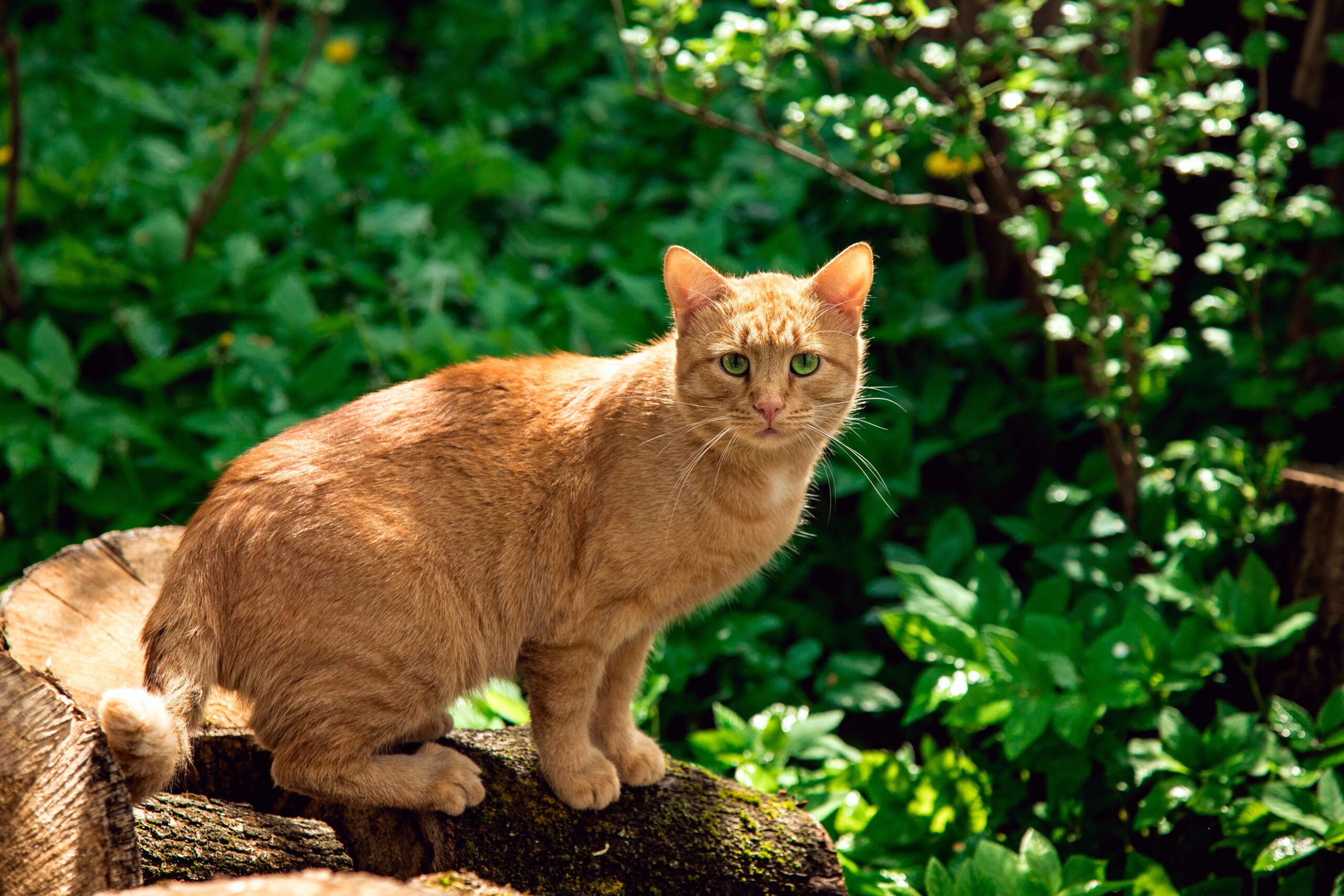
Why are orange cats so often male, while females are more likely to have patches of orange mixed with darker fur? Geneticists have understood the inheritance pattern for decades, but the molecular change responsible for it remained elusive.
In 2025, two independent research teams identified a small deletion in feline DNA that explains both orange coloration and its unusual pattern of inheritance. Their findings also demonstrate how changes in gene regulation can produce visible traits without altering a protein’s coding sequence.
A Tiny DNA Deletion With a Colorful Effect
Researchers at Stanford University in California and Kyushu University in Japan independently connected orange coats to a deletion of approximately 5,000 DNA bases in a non-protein-coding region of a gene called Arhgap36, located on the X chromosome.
The missing DNA does not directly change the protein encoded by the gene. Instead, it appears to alter when and where the gene is active. The Stanford team found substantially more Arhgap36 RNA in orange-cat skin than in nonorange-cat skin, reflecting increased gene expression.
This was unexpected. Scientists had previously linked Arhgap36 to biological processes involved in development and cell signaling, but not to coat color. The gene is not normally active in the pigment-producing cells of nonorange cats.
The published findings, from the Stanford and Kyushu researchers, appeared in the same issue of Current Biology.
How the Mutation Changes Pigment Production
Fur color depends on pigments made by specialized cells called melanocytes. Two forms of melanin contribute to the color range: eumelanin produces black or brown tones, while pheomelanin produces yellow or reddish tones.
In most mammals, a signaling pathway involving the melanocortin 1 receptor helps control the balance between these pigments. The orange-cat mutation affects that pathway in an unusual way.
When Arhgap36 becomes active in feline melanocytes, its protein reduces the activity of protein kinase A, a molecule that regulates pigment-related genes. The result is reduced expression of genes needed for eumelanin production, shifting pigment synthesis toward pheomelanin.
Rather than changing a familiar pigment receptor, the mutation alters a later step in the cellular signaling process.
Why Orange Cats Are More Often Male
The mutation’s location on the X chromosome explains the striking differences between male and female coats.
Male cats typically have one X chromosome, so inheriting the mutation on that chromosome can produce an orange coat. Female cats usually have two X chromosomes. A female with the mutation on only one X can develop both orange and darker areas because each cell randomly switches off one of its X chromosomes during early development.
As these cells multiply, they form groups of pigment cells with different active X chromosomes. This produces the mottled orange-and-black appearance of tortoiseshell cats. Calico cats have a similar genetic mosaic along with a separate white-spotting trait that creates larger patches of color.
A female cat can also be predominantly orange, but she generally must inherit the orange-linked mutation on both X chromosomes.
What the Discovery Reveals About Genetics
The findings illustrate an important principle of genetics: a DNA change can alter a trait by changing where a gene is expressed, even when the protein-coding sequence remains intact. In this case, expression of Arhgap36 in pigment cells changes the signals that govern color.
The research does not establish that the mutation affects orange cats’ personalities or intelligence. Investigators found no corresponding difference in Arhgap36 expression in several tissues outside the skin, including the brain.
By solving a familiar puzzle in feline coloration, researchers have provided another example of how genetic regulation shapes the traits we can see, and how much information may be hidden in portions of DNA that do not encode proteins.
Did you enjoy this blog post? Check out our other blog posts as well as related topics on our Webinar page.
QPS is a global, full-service, GLP/GCP-compliant contract research organization (CRO) delivering the highest grade of discovery, bioanalysis, preclinical and clinical drug development services. Since 1995, QPS has grown from a small bioanalysis shop into a full-service CRO with 1,200+ employees in the US, Europe, Asia and India. Today, QPS offers expanded pharmaceutical contract R&D services with special expertise in pharmacology, DMPK, toxicology, bioanalysis, translational medicine, PBMC processing, central safety labs, clinical trials, and clinical research services. An award-winning leader focused on bioanalysis and clinical trials, QPS is known for proven quality standards, technical expertise, a flexible approach to research, client satisfaction, turnkey laboratories, Phase I/II clinical units, and multi-site clinical research services. Through continual enhancements in capacities and resources, QPS stands tall in its commitment to delivering superior quality, skilled performance, and trusted service to its valued customers. For more information, visit www.qps.com or email info@qps.com.