



Since emerging from China in 1996, bird flu has reshaped ecosystems in Asia, Europe, Africa and North and South America. Now the virus has found another foothold—one that raises fresh concerns for human health. Researchers have detected evidence of exposure to H5N1 avian influenza in vampire bats, marking the latest jump of the virus into a mammalian host.
The discovery, reported at bioRxiv.org comes from Peru, where scientists identified H5N1 antibodies in more than a dozen vampire bats. Although the animals were no longer carrying detectable viral genetic material, the antibodies revealed past infection. Each new mammal infected by bird flu matters, says Vincent Munster, a virus ecologist at the Rocky Mountain Laboratories in Hamilton, Montana, because every jump offers the virus another chance to adapt. He called the finding “very worrisome.”
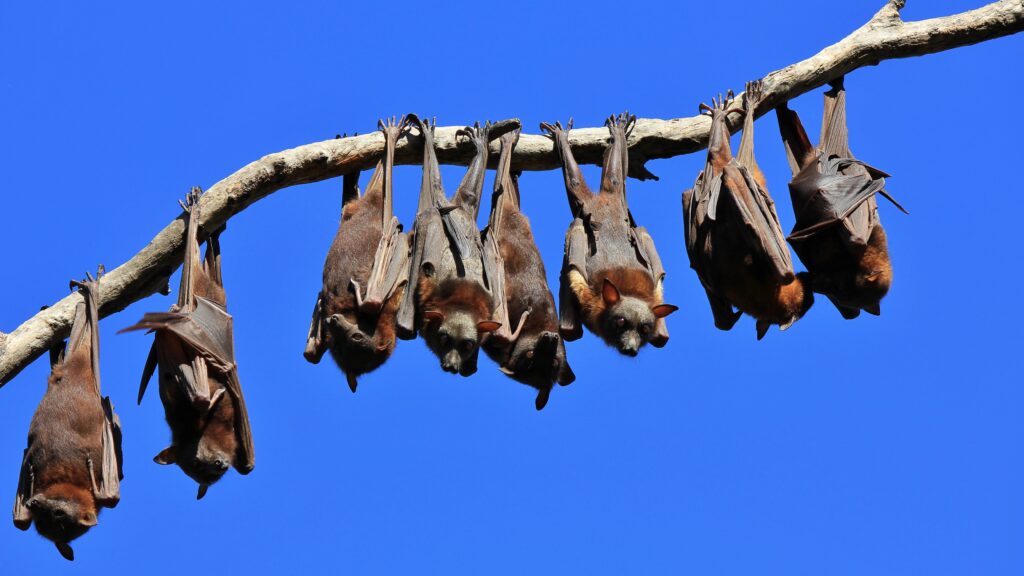
Bats at the Edge of an Animal Pandemic
Many bat species serve as reservoirs for viruses that can infect people, from rabies to coronaviruses. If bird flu takes hold in bat populations, the implications could be profound.
Gregory Gray, an infectious disease epidemiologist at the University of Texas Medical Branch in Galveston, warns that large bat colonies could act as reservoirs for H5N1 if multiple species prove susceptible. That would give the virus new opportunities to circulate, persist and potentially spread to livestock or humans.
Concerns extend beyond Peru. In Bangladesh, researchers investigating unexplained bat deaths suspect bird flu may be involved. Sixteen flying foxes—large fruit bats known for their close contact with human communities—appear to have died from H5N1, according to Munster, who is helping investigate the outbreak.
Following a Trail of Death—and Antibodies
The Peruvian study grew out of fieldwork by wildlife veterinarian I-Ting Tu, who began sampling vampire bats in 2023 to study viruses that might pass from bats to marine animals. As bird flu devastated sea lions and seabirds along Peru’s coast devastated sea lions and seabirds along Peru’s coast, she wondered whether bats feeding on these animals were also being exposed.
Her team collected samples from bats in three regions: coastal areas where bats fed exclusively on marine animals, inland Andean sites where they fed on livestock and humans and mixed zones where both food sources were available.
The results were striking. Fourteen bats—all from coastal sites and all feeding on marine animals—carried antibodies to H5N1. None of the bats from inland or mixed-diet areas showed evidence of exposure.
That pattern made sense to Susana Cárdenas-Alayza, a conservation biologist at Cayetano Heredia University in Lima. During the outbreak, she recalled, “It was apocalyptic.” Sick sea lions littered the coastline, coughing and dying as the virus spread unchecked.
A New Viral Pathway Emerges
Vampire bats are uniquely suited to pick up pathogens from infected animals. They use heat-sensing organs in their noses to locate blood-rich areas, often targeting mucosal surfaces such as the eyes or anus—prime sites for viral shedding. Cárdenas-Alayza notes that bats feeding in a heavily contaminated coastal environment may have been exposed repeatedly.
Laboratory tests suggest the virus can attach to and infect bat cells from several organs, including the lungs and kidneys. Still, there is no evidence yet that H5N1 spreads efficiently between bats. Daniel Streicker, a disease ecologist at the University of Glasgow, suspects the virus is not yet adapted for sustained transmission within bat populations. However, repeated spillovers from marine animals to bats could allow H5N1 to acquire new traits over time, Streicker cautions, possibly increasing its ability to infect new hosts.
Watching the Crossroads Carefully
Scientists are now asking broader questions. How well does H5N1 replicate in bats? Can it evolve within them? And what other avian influenza viruses might already be circulating undetected? A related bird flu virus discovered in Egyptian flying foxes in 2017 showed worrying flexibility, combining traits from viruses known to infect both birds and mammals.
Gray emphasizes that surveillance is critical, especially at the interface between wildlife and agriculture. With bats frequently interacting with livestock, monitoring viral movement across species boundaries is essential.
A Chance to Stay Ahead
The emergence of H5N1 in bats is a reminder that viruses exploit every ecological opportunity they are given. Yet it also underscores the value of early detection. By identifying new hosts quickly and tracking how the virus behaves in them, scientists can spot dangerous changes before they reach people.
Did you enjoy this blog post? Check out our other blog posts as well as related topics on our Webinar page.
QPS is a global, full-service, GLP/GCP-compliant contract research organization (CRO) delivering the highest grade of discovery, bioanalysis, preclinical and clinical drug development services. Since 1995, QPS has grown from a small bioanalysis shop into a full-service CRO with 1,200+ employees in the US, Europe, Asia and India. Today, QPS offers expanded pharmaceutical contract R&D services with special expertise in pharmacology, DMPK, toxicology, bioanalysis, translational medicine, PBMC processing, central safety labs, clinical trials, and clinical research services. An award-winning leader focused on bioanalysis and clinical trials, QPS is known for proven quality standards, technical expertise, a flexible approach to research, client satisfaction, turnkey laboratories, Phase I/II clinical units, and multi-site clinical research services. Through continual enhancements in capacities and resources, QPS stands tall in its commitment to delivering superior quality, skilled performance, and trusted service to its valued customers. For more information, visit www.qps.com or email info@qps.com.