



It’s humanity’s oldest, most controversial mystery: How did complex life emerge on Earth? Scientists know that the answer lies with eukaryotes, the multi-cellular life forms that encompass plants, animals, insects, and fungi. But where did eukaryotes come from?
Years of research and genomic analysis suggest that eukaryotes evolved from a group of organisms within the Asgard archaea kingdom. Read on to learn more about these mysterious single-celled progenitors, including how they could drive the development of complex life on Earth and beyond.
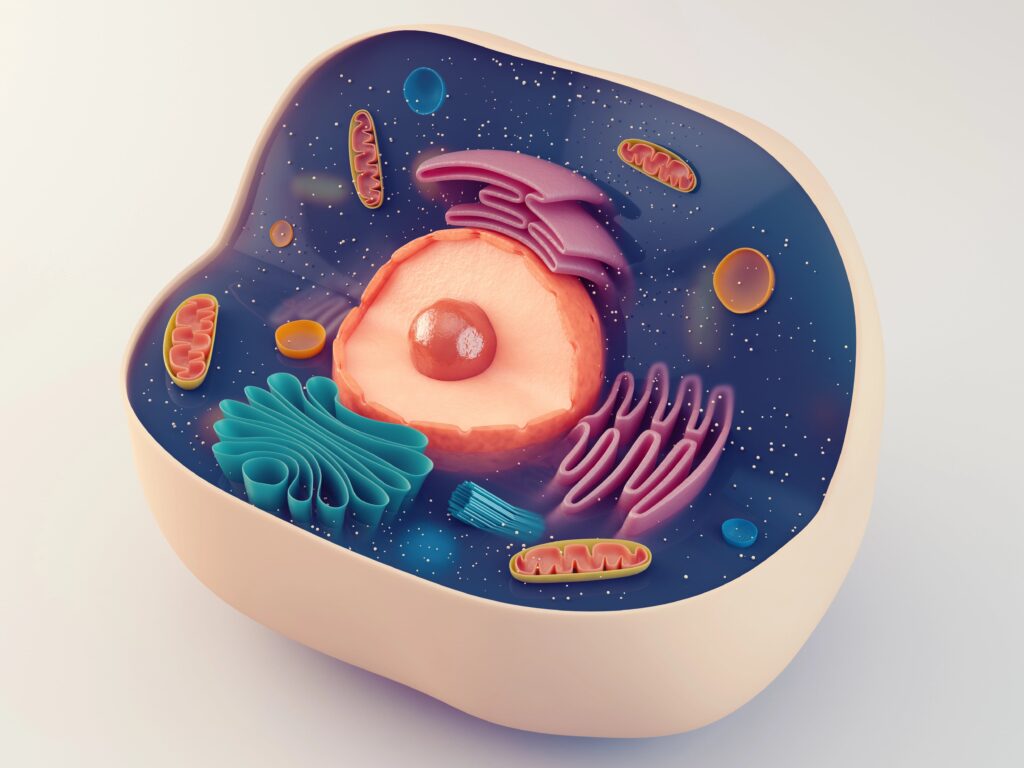
What Can Asgard Archaea Teach Us About Complex Life?
Archaea don’t look like much. They’re microscopic organisms living in shadowy places like hot springs, salt lakes, and deep-sea vents. But a specific subkingdom of these unassuming life forms could be the key to understanding complex life on Earth. Asgard archaea, a unique type of archaea, were discovered a decade ago in ocean sediments. Since then, Asgard archaea have become the leading candidate to explain eukaryotes’ earthly origins.
Mapping Eukaryote Origins
The oldest known living things are simple, single-celled organisms that fall into one of two domains: bacteria and archaea.
But, wait — take a quick look around.
Every visible life-form in your immediate area — including people, trees, and birds — is a member of a third domain. These are eukaryotes, and they came about much later in Earth’s history than the older groups. They’re also significantly larger and more complex than the older groups, capable of forming multicellular organisms like muscle tissue and bone. But how did these complex eukaryotes form in a world previously occupied by only single-celled bacteria and archaea? Research suggests that Asgard archaea may have started it all, serving as a common ancestor for eukaryotes.
The “why” and “how” behind these origins remain unclear. Many researchers believe that the first eukaryote emerged when an archaeal ancestor partnered with a bacterium, although this theory has not yet been confirmed. However, experts can agree that the birth of eukaryotes was far from spontaneous. The Asgard archaea appear to have evolved in ways that primed them to form eukaryotes. This suggests that the formation of complex life wasn’t an act of chance, as many biologists suspected, but a natural — even inevitable — evolutionary pathway.
Complex Life on Earth and Beyond
Studying Asgard archaea has transformed experts’ understanding of eukaryotic origins on Earth. But these organisms also have interesting implications related to the possibility of extraterrestrial life, as evidenced in a recent analysis published in Science News. If the rise of eukaryotes was inevitable, as some experts now believe, that may increase the chances that other planets have experienced similar evolutionary pathways. In other words, other complex life could exist outside of Earth.
_____
Most hypotheses related to archaea remain unproven, especially in the realm of extraterrestrial life. However, it’s essential to remember that Asgard archaea were discovered just 10 years ago. During that time, scientists’ understanding of complex life has undergone a dramatic transformation. We are excited to see what the next 10 years bring!
QPS is a global, full-service, GLP/GCP-compliant contract research organization (CRO) delivering the highest grade of discovery, bioanalysis, preclinical and clinical drug development services. Since 1995, QPS has grown from a small bioanalysis shop into a full-service CRO with 1,200+ employees in the US, Europe, Asia and India. Today, QPS offers expanded pharmaceutical contract R&D services with special expertise in pharmacology, DMPK, toxicology, bioanalysis, translational medicine, PBMC processing, central safety labs, clinical trials, and clinical research services. An award-winning leader focused on bioanalysis and clinical trials, QPS is known for proven quality standards, technical expertise, a flexible approach to research, client satisfaction, turnkey laboratories, Phase I/II clinical units, and multi-site clinical research services. Through continual enhancements in capacities and resources, QPS stands tall in its commitment to delivering superior quality, skilled performance, and trusted service to its valued customers. For more information, visit www.qps.com or email info@qps.com.