


For a few remarkable years, glucagon-like peptide-1 (GLP-1) drugs have seemed almost unstoppable. Originally designed to control blood sugar in diabetes, medications like semaglutide went on to transform weight-loss medicine and show promise across a startling range of conditions, from heart disease to addiction. Scientists have also investigated whether these metabolic powerhouses might slow neurodegenerative diseases such as Alzheimer’s disease (AD). Two large clinical trials have now delivered a sobering answer.
In studies involving nearly 4,000 people with early-stage AD, a daily oral dose of semaglutide failed to slow cognitive decline. The results, presented December 3 at the Clinical Trials on Alzheimer’s Disease conference in San Diego, landed hard across the field. Daniel Drucker, an endocrinologist at the University of Toronto who was not involved with the trials, described the findings as “very disappointing.”
From Miracle Narrative to Reality Check
GLP-1 agonists work by mimicking gut hormones that regulate appetite, digestion and glucose levels. Along the way, researchers began noticing broader effects: reduced inflammation, cardiovascular benefits and hints of brain protection. Excess glucose is a risk factor for both Alzheimer’s and Parkinson’s disease, so it stands to reason that controlling glucose would have a positive effect.
Early signals reinforced the optimism. Animal studies, observational data and patient anecdotes suggested cognitive benefits. A small trial of liraglutide even hinted at a slowing of cognitive decline. But as Drucker noted, such reports are “not a substitute for a well-powered, randomized double-blind placebo-controlled trial.” The evoke and evoke+ trials were exactly that.
Inside the Clinical Trials
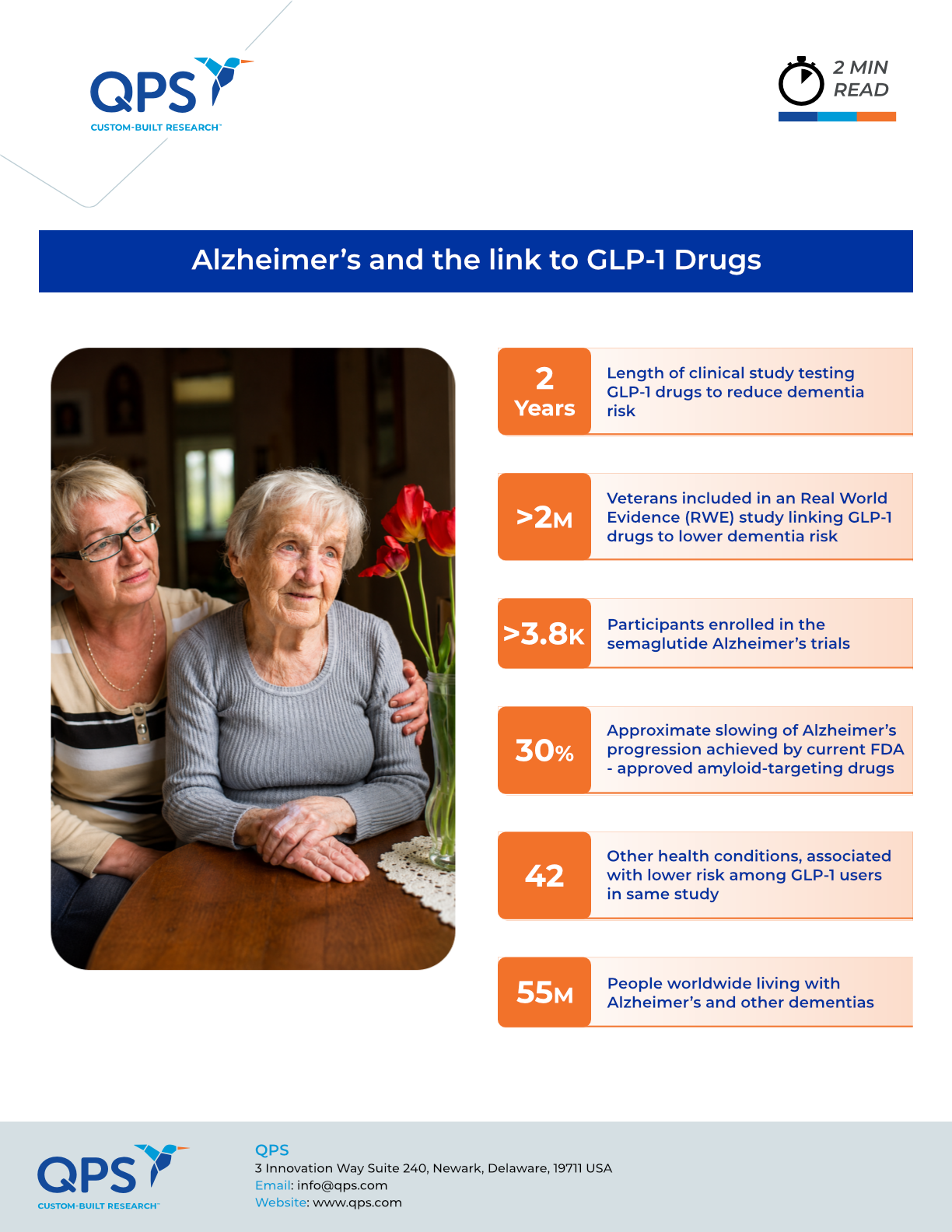
The study participants, with an average age of 70, took either oral semaglutide or a placebo daily for about two years, while researchers tracked changes in cognition and disease biomarkers.
Some biological effects did appear. In a subset of participants, researchers saw modest reductions in AD-related biomarkers. However, on a test that evaluated pre- and post-treatment changes in clinical dementia, the drug and placebo groups were indistinguishable. As Jeffrey Cummings, a leader of the trials and a neurologist at the University of Nevada, Las Vegas, said as he presented the findings, “We did not have the corresponding benefit on cognition that we had hoped for.”
For neurologist Reisa Sperling, who is co-Principal Investigator of the Harvard Aging Brain Study, viewing the results at the meeting was difficult. “You could clearly see that [patients] had no clinical benefit whatsoever,” she said. She emphasized that the results were not due to poor study design. “It was a very well-run set of trials that gave us a clear answer,” she added.
Why the Promise Didn’t Translate
The failure of semaglutide in AD echoes other recent setbacks. A trial of semaglutide among people with Parkinson’s disease showed no clinical benefit, following mixed results with other GLP-1 drugs.
There are many plausible explanations. GLP-1 drugs may work better as preventives than as treatments, Drucker suggests, or the disease may have been too advanced in the study participants. Another possibility is that too little of the drug crossed into the brain. “These are all things we don’t know the answer to,” he says.
The trials also highlight a deeper challenge: neurodegenerative diseases progress slowly. Detecting meaningful change requires huge studies and long timelines. At the same time, scientists still don’t fully understand how GLP-1 drugs act in the brain.
A Setback, Not a Dead End
Despite the disappointment, researchers are not abandoning GLP-1s in neurology. Instead, the results are forcing a strategic reset—rethinking dosing, timing, drug design and which patients might benefit. “I don’t think the field is stopped in its tracks,” said Drucker. But “we need to rethink our strategy and take a step back.”
By clearly defining where GLP-1 drugs fall short, researchers can better understand how to design the next generation of therapies. AD remains one of medicine’s most formidable challenges, but each clear answer, even a disappointing one, may help shape the path forward.
Did you enjoy this blog post? Check out our other blog posts as well as related topics on our Webinar page.
QPS is a global, full-service, GLP/GCP-compliant contract research organization (CRO) delivering the highest grade of discovery, bioanalysis, preclinical and clinical drug development services. Since 1995, QPS has grown from a small bioanalysis shop into a full-service CRO with 1,200+ employees in the US, Europe, Asia and India. Today, QPS offers expanded pharmaceutical contract R&D services with special expertise in pharmacology, DMPK, toxicology, bioanalysis, translational medicine, PBMC processing, central safety labs, clinical trials, and clinical research services. An award-winning leader focused on bioanalysis and clinical trials, QPS is known for proven quality standards, technical expertise, a flexible approach to research, client satisfaction, turnkey laboratories, Phase I/II clinical units, and multi-site clinical research services. Through continual enhancements in capacities and resources, QPS stands tall in its commitment to delivering superior quality, skilled performance, and trusted service to its valued customers. For more information, visit www.qps.com or email info@qps.com.