


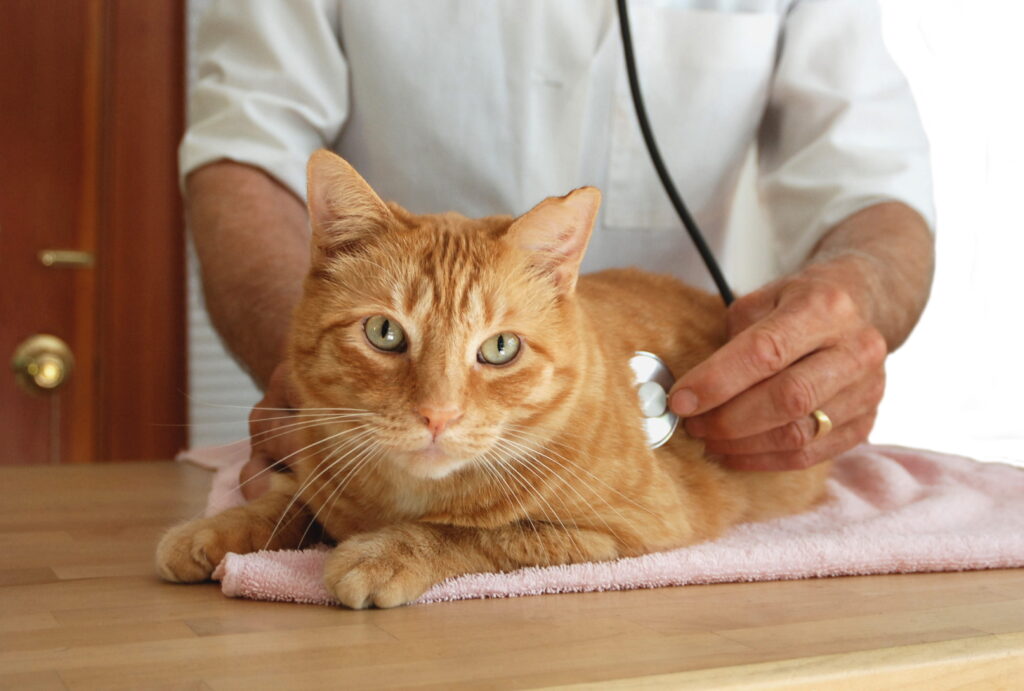
“There are two means of refuge from the misery of life: music and cats,” German scholar Albert Schweitzer once said. Even if you’re not a cat person, it’s hard to deny the appeal of a warm, furry friend curled up on your lap. In the U.S. alone, cats are valued family members in as many as 46.5 million households. But a new large-scale analysis suggests that cats may benefit humanity beyond cozy companionship. The analysis, published February 19 in Science, explored “the oncogenome of the domestic cat” — a study of the complete set of genes driving feline cancer. It may help guide new treatments for both pets and people.
Could Cat Genetics Point to Human Cancer Treatments?
Christie Wilcox, the newsletter editor for Science, contextualizes this analysis by noting that “cats are exposed to many of the same environmental risks as their owners, and they fall victim to many of the same ailments.” She adds that cancer “is one of the leading causes of illness and death in cats, but the genetics of this disease in felines remain relatively unexplored.”
To remedy that knowledge gap, the team behind this recent analysis conducted an in-depth journey into feline cancer genomics, analyzing tumor DNA from almost 500 domestic cats across five countries.
Methods of Analyzing Feline Cancer
First, the researchers screened around 1,000 genes known to be linked to human cancer. Then, they compared tumor samples and healthy tissue samples across 13 different types of feline cancer, using tissue originally collected for veterinary diagnostics. Next, they compared those samples to cancer samples collected from both humans and dogs.
Per the study abstract, the team performed “targeted sequencing of 493 feline tumor-normal tissue pairs from 13 tumor types.” When compared with human sequencing, the researchers found something surprising: the feline cancers showed genetic patterns mirroring those found in people.
Surprising Genetic Similarities
There were several notable examples of similarities between human and feline cancer genes; however, some of the most promising insights came from studying two similar types of cancer: mammary carcinomas, an aggressive form of cancer in cats, and human breast cancer. For example, the cancer-driving gene FBXW7 appeared regularly, showing abnormalities in more than half of the tumors studied in both humans and cats. In both humans and cats, mutations in the FBXW7 gene are associated with a worse prognosis. The analysis also found that certain chemotherapy drugs were more effective in tumor samples with FBXW7 mutations. This insight could lead to treatments targeting cancer in both cats and humans.
_____
As Wilcox explains in ScienceAdvisor, this analysis is the “first time that feline cancers have been genetically profiled at a large scale.” The findings could strengthen the “One Medicine” or “One Health” movement, which encourages collaboration between human and veterinary medicine to advance both fields.
“By comparing cancer genomics across different species, we gain a greater understanding of what causes cancer,” wrote study co-author Bailey Francis. “This could help experts in the veterinary field as well as those studying cancer in humans, showing that when knowledge and data flow between different disciplines, we can all benefit.”
QPS is a global, full-service, GLP/GCP-compliant contract research organization (CRO) delivering the highest grade of discovery, bioanalysis, preclinical and clinical drug development services. Since 1995, QPS has grown from a small bioanalysis shop into a full-service CRO with 1,200+ employees in the US, Europe, Asia and India. Today, QPS offers expanded pharmaceutical contract R&D services with special expertise in pharmacology, DMPK, toxicology, bioanalysis, translational medicine, PBMC processing, central safety labs, clinical trials, and clinical research services. An award-winning leader focused on bioanalysis and clinical trials, QPS is known for proven quality standards, technical expertise, a flexible approach to research, client satisfaction, turnkey laboratories, Phase I/II clinical units, and multi-site clinical research services. Through continual enhancements in capacities and resources, QPS stands tall in its commitment to delivering superior quality, skilled performance, and trusted service to its valued customers. For more information, visit www.qps.com or email info@qps.com.