


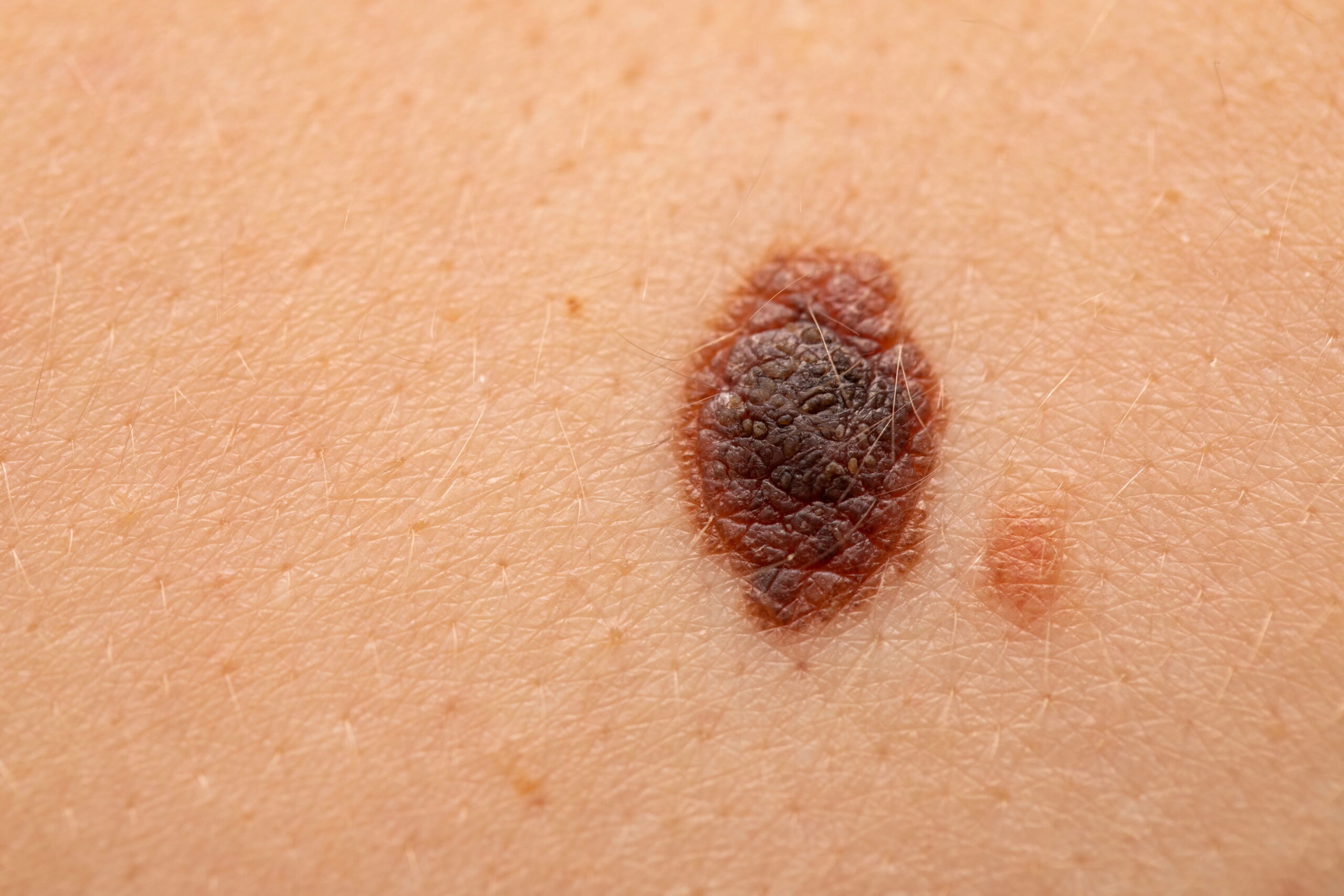
The recurrence rate of resected melanoma varies widely, from less than five percent in Stages 0 and I to over 70 percent in Stage IV melanoma. Stages IIB to IV cases are classified as high-risk: melanoma that carries a significant risk of returning, even after complete resection. Pembrolizumab, a PD-1 inhibitor, is a standard treatment for high-risk resected melanoma; however, new study results could transform that standard of care.
On August 21, Merck and Moderna, Inc. announced positive topline results from a study that explored the effects of combining pembrolizumab with another therapy: a novel investigational mRNA-based individualized neoantigen therapy (INT) called intismeran autogene. The Phase III INTerpath-001 trial focused on patients with completely resected stage IIB to IV melanoma and showed positive topline results for both recurrence-free survival and distant metastasis-free survival. Read on for more information about the trial, which is the first Phase III study to report a positive result for an individualized mRNA cancer vaccine.
Melanoma Trial Meets Key Endpoints
Developed by Moderna and Merck, intismeran autogene (formerly mRNA-4157/V940) is an individualized mRNA vaccine capable of targeting neoantigens: mutations that are unique to an individual patient’s cancer. The vaccine is manufactured to encode selected neoantigens and is then given alongside pembrolizumab to teach the immune system to recognize and eliminate residual melanoma cells. In other words, the combination is meant to be a highly personalized therapeutic combination designed to prevent cancer recurrence.
The Phase III INTerpath-001 trial asked: Could the combination be more effective than receiving pembrolizumab alone?
Phase III Melanoma Trial Design
INTerpath-001 was a randomized, double-blind, placebo- and active comparator–controlled global Phase III trial. The study enrolled 1,137 patients with completely resected, high-risk stage IIB–IV melanoma across 26 countries.
Following surgical resection, the patients were randomly assigned to one of two groups. One group received intismeran at 1 mg every three weeks for up to nine doses; they also received pembrolizumab at 400 mg every six weeks for up to nine cycles. The second group received pembrolizumab alone, either until disease recurrence or unacceptable toxicity occurred, or for a total treatment duration of up to 56 weeks.
Promising Outcomes for Study Participants
The study’s primary endpoint was recurrence-free survival (RFS), defined within the study as “the length of time from when the participant starts the study until either the cancer comes back, or the cancer spreads as assessed by the investigator, or death due to any cause.” Key secondary endpoints included distant metastasis–free survival (DMFS), overall survival, safety, tolerability, and quality of life.
The trial met its primary RFS endpoint, with topline results showing that the combination significantly reduced the risk of melanoma recurrence compared with pembrolizumab alone. The trial also met a key secondary endpoint: distant metastasis-free survival (DMFS). The combination was shown to significantly reduce the risk of melanoma spreading to distant organs. As mentioned above, the results make this the first positive Phase III result for an mRNA-based cancer therapy.
The results of this study are promising; however, it is important to note that the trial’s detailed numerical efficacy results have not yet been fully published. Fuller data, including detailed hazard ratios and confidence intervals, is expected at a later date.
Looking ahead, the treatment’s multi-step nature also has unique manufacturing implications. Drug companies will need to explore whether the personalized drug manufacturing process can be made fast and affordable enough for routine clinical use.
_____
While further data is anticipated to help solidify the efficacy of the Phase III INTerpath-001 trial, the trial has proven that a combined strategy targeting both immune function and unique tumor neoantigens can outperform pembrolizumab alone. This, in itself, may provide a beacon of hope for patients desperately hoping to avoid melanoma recurrence.
QPS is a global, full-service, GLP/GCP-compliant contract research organization (CRO) delivering the highest grade of discovery, bioanalysis, preclinical and clinical drug development services. Since 1995, QPS has grown from a small bioanalysis shop into a full-service CRO with 1,200+ employees in the US, Europe, Asia and India. Today, QPS offers expanded pharmaceutical contract R&D services with special expertise in pharmacology, DMPK, toxicology, bioanalysis, translational medicine, PBMC processing, central safety labs, clinical trials, and clinical research services. An award-winning leader focused on bioanalysis and clinical trials, QPS is known for proven quality standards, technical expertise, a flexible approach to research, client satisfaction, turnkey laboratories, Phase I/II clinical units, and multi-site clinical research services. Through continual enhancements in capacities and resources, QPS stands tall in its commitment to delivering superior quality, skilled performance, and trusted service to its valued customers. For more information, visit www.qps.com or email info@qps.com.